

What is the thermal conductivity of 12x12 Terrazzo Tiles?
Sep 16, 2025
Terrazzo tiles have long been a popular choice for flooring and wall applications due to their durability, aesthetic appeal, and versatility. As a supplier of 12x12 Terrazzo Tiles, I often receive inquiries about various properties of these tiles, including their thermal conductivity. In this blog post, I will delve into the concept of thermal conductivity, explain what affects the thermal conductivity of 12x12 terrazzo tiles, and discuss its implications for different applications.
Understanding Thermal Conductivity
Thermal conductivity is a measure of a material's ability to conduct heat. It is defined as the quantity of heat that passes through a unit area of a material in a unit time when there is a unit temperature difference between two opposite faces of the material. The SI unit of thermal conductivity is watts per meter-kelvin (W/(m·K)).
A material with high thermal conductivity transfers heat quickly, while a material with low thermal conductivity is a good insulator and resists the flow of heat. For example, metals like copper and aluminum have high thermal conductivities, which is why they are commonly used in heat exchangers and cooking utensils. On the other hand, materials like fiberglass and polystyrene have low thermal conductivities and are used for insulation purposes.
Factors Affecting the Thermal Conductivity of 12x12 Terrazzo Tiles
Terrazzo tiles are composite materials made up of chips of marble, quartz, granite, glass, or other aggregates bound together with a cementitious or resinous matrix. The thermal conductivity of 12x12 terrazzo tiles is influenced by several factors:
Aggregate Type
The type of aggregate used in the terrazzo tiles plays a significant role in determining their thermal conductivity. Different aggregates have different thermal conductivities. For instance, granite has a relatively high thermal conductivity compared to glass. Therefore, terrazzo tiles with a higher proportion of granite aggregates will generally have a higher thermal conductivity than those with more glass aggregates.
Matrix Material
The matrix material that binds the aggregates together also affects the thermal conductivity of the terrazzo tiles. Cementitious matrices, such as Portland cement, have different thermal properties compared to resinous matrices. Resinous matrices may have lower thermal conductivities than cementitious matrices, which can contribute to the overall insulation properties of the tiles.
Porosity
The porosity of the terrazzo tiles can impact their thermal conductivity. Porous materials tend to have lower thermal conductivities because the air trapped in the pores acts as an insulator. If the terrazzo tiles have a high porosity, they will transfer heat more slowly than dense, non - porous tiles.
Tile Thickness
The thickness of the 12x12 terrazzo tiles can also affect their thermal conductivity. Thicker tiles generally have a lower effective thermal conductivity because heat has to travel a longer distance through the material. However, this relationship is not always linear and can be influenced by other factors such as the composition of the tile.
Typical Thermal Conductivity Values of 12x12 Terrazzo Tiles
Determining the exact thermal conductivity of 12x12 terrazzo tiles can be challenging because it depends on the specific composition and manufacturing process of the tiles. However, based on general knowledge of similar composite materials, the thermal conductivity of terrazzo tiles typically ranges from 0.5 to 2.0 W/(m·K).
This range is relatively moderate compared to other building materials. For example, metals can have thermal conductivities in the hundreds or even thousands of W/(m·K), while insulating materials like expanded polystyrene can have thermal conductivities as low as 0.03 W/(m·K).
Implications of Thermal Conductivity for Different Applications
The thermal conductivity of 12x12 terrazzo tiles has several implications for their use in different applications:
Flooring in Residential Buildings
In residential buildings, the thermal conductivity of the flooring material can affect the comfort of the occupants. Terrazzo tiles with a moderate thermal conductivity can provide a comfortable walking surface. They are not as cold as some other hard flooring materials like ceramic tiles in winter and do not get overly hot in summer. This makes them a suitable choice for living rooms, bedrooms, and hallways.
Commercial Spaces
In commercial spaces such as offices and retail stores, the thermal conductivity of the terrazzo tiles can impact energy efficiency. If the tiles have a relatively low thermal conductivity, they can help reduce heat transfer between the interior and exterior of the building, leading to lower heating and cooling costs. Additionally, the durability of terrazzo tiles makes them a practical choice for high - traffic areas.
Bathroom Terrazzo Floor Tile
In bathrooms, the thermal conductivity of the terrazzo tiles can be important for comfort. Since bathrooms are often wet, tiles with a moderate thermal conductivity can prevent the floor from feeling too cold underfoot. Moreover, terrazzo tiles are resistant to water and stains, making them a popular choice for bathroom flooring.
Comparing Terrazzo Tiles with Other Flooring Materials
When considering the thermal conductivity of 12x12 terrazzo tiles, it is useful to compare them with other common flooring materials:
Ceramic Tiles
Ceramic tiles generally have a higher thermal conductivity than terrazzo tiles. This means that ceramic tiles can feel colder in winter and may require more energy to heat the room. Terrazzo tiles, with their moderate thermal conductivity, can offer a more comfortable alternative.
Carpet
Carpet has a very low thermal conductivity, which makes it a good insulator. However, carpets can be difficult to clean and may not be as durable as terrazzo tiles. Terrazzo tiles provide a balance between thermal comfort and durability.
Wood Flooring
Wood flooring has a relatively low thermal conductivity compared to terrazzo tiles. However, wood is susceptible to moisture damage and may require more maintenance. Terrazzo tiles are more resistant to moisture and can be a better choice for areas with high humidity.
Customizing Terrazzo Tiles for Thermal Performance
As a supplier of 12x12 Terrazzo Tiles, we understand that different customers may have different requirements for the thermal performance of the tiles. We can work with customers to customize the composition of the terrazzo tiles to achieve the desired thermal conductivity.
For example, if a customer needs tiles with a lower thermal conductivity for an energy - efficient building, we can use aggregates and matrices with lower thermal conductivities and adjust the porosity of the tiles. On the other hand, if a customer requires tiles with a higher thermal conductivity for a specific application, we can select appropriate aggregates and manufacturing processes.
Conclusion
The thermal conductivity of 12x12 terrazzo tiles is an important property that can influence their performance in various applications. Ranging from 0.5 to 2.0 W/(m·K), the thermal conductivity of these tiles is affected by factors such as aggregate type, matrix material, porosity, and tile thickness.
Whether you are looking for a comfortable flooring option for your home or an energy - efficient solution for a commercial building, terrazzo tiles offer a good balance of thermal performance, durability, and aesthetic appeal.
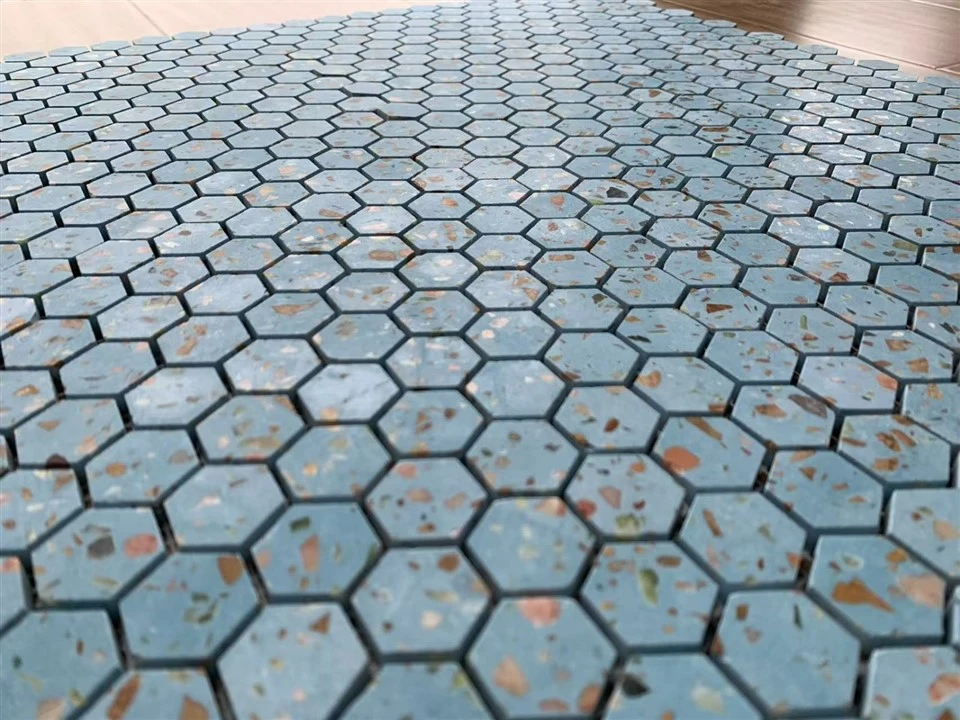
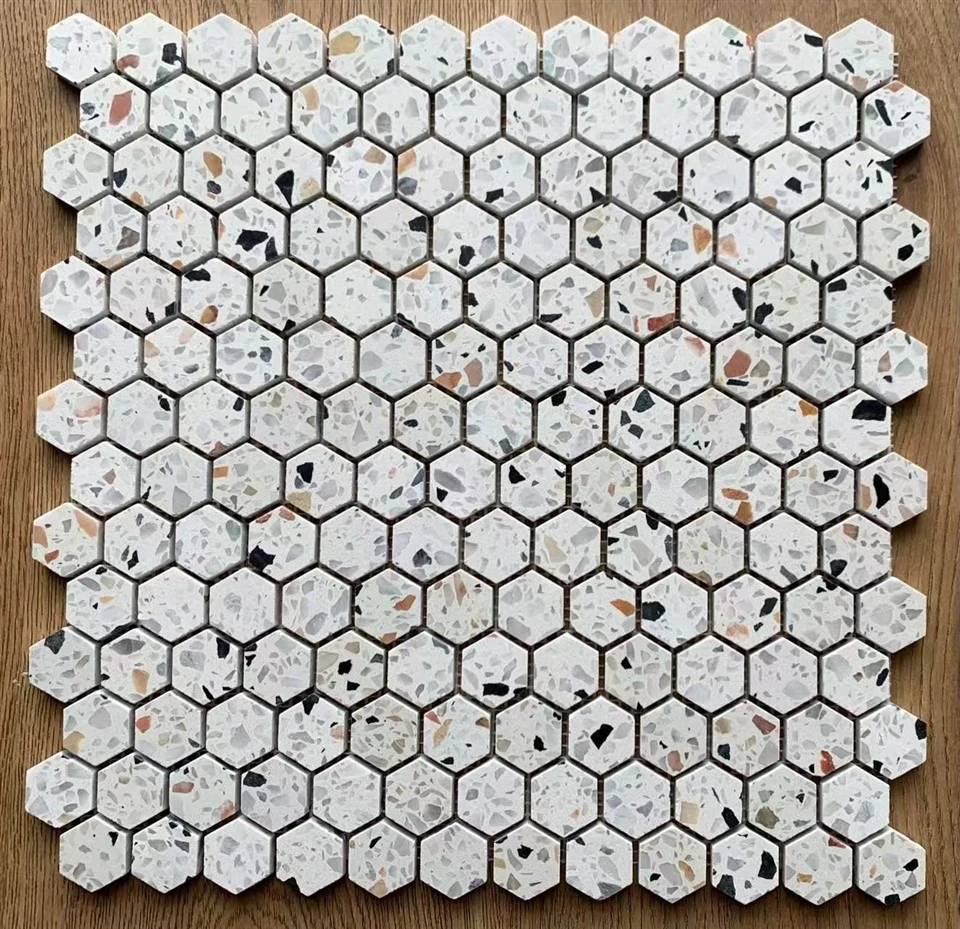
If you are interested in purchasing 12x12 terrazzo tiles or have any questions about their thermal conductivity or other properties, please feel free to contact us. We are here to assist you in finding the perfect terrazzo tiles for your project. We also offer a wide range of Terrazzo Mosaic Tiles that can add a unique touch to your space.
References
- Incropera, F. P., & DeWitt, D. P. (2002). Fundamentals of Heat and Mass Transfer. John Wiley & Sons.
- Kreith, F., & Bohn, M. S. (2001). Principles of Heat Transfer. Cengage Learning.
- ASHRAE Handbook - Fundamentals. American Society of Heating, Refrigerating and Air - Conditioning Engineers.