

Are there any issues with the seams on a quartz vanity top?
Dec 05, 2025
Hey there! As a supplier of quartz vanity tops, I often get asked about the seams on these tops. So, let's dive right in and talk about whether there are any issues with the seams on a quartz vanity top.
First off, let's understand what quartz vanity tops are. Quartz is an engineered stone made up of about 90 - 94% natural quartz crystals and 6 - 10% resins and pigments. This combination makes it a popular choice for vanity tops because it's durable, non - porous, and comes in a wide range of colors and patterns.
Now, when it comes to large vanity tops, it's often necessary to use seams. That's because quartz slabs are usually produced in standard sizes, and if you need a bigger top, you'll have to join two or more slabs together.

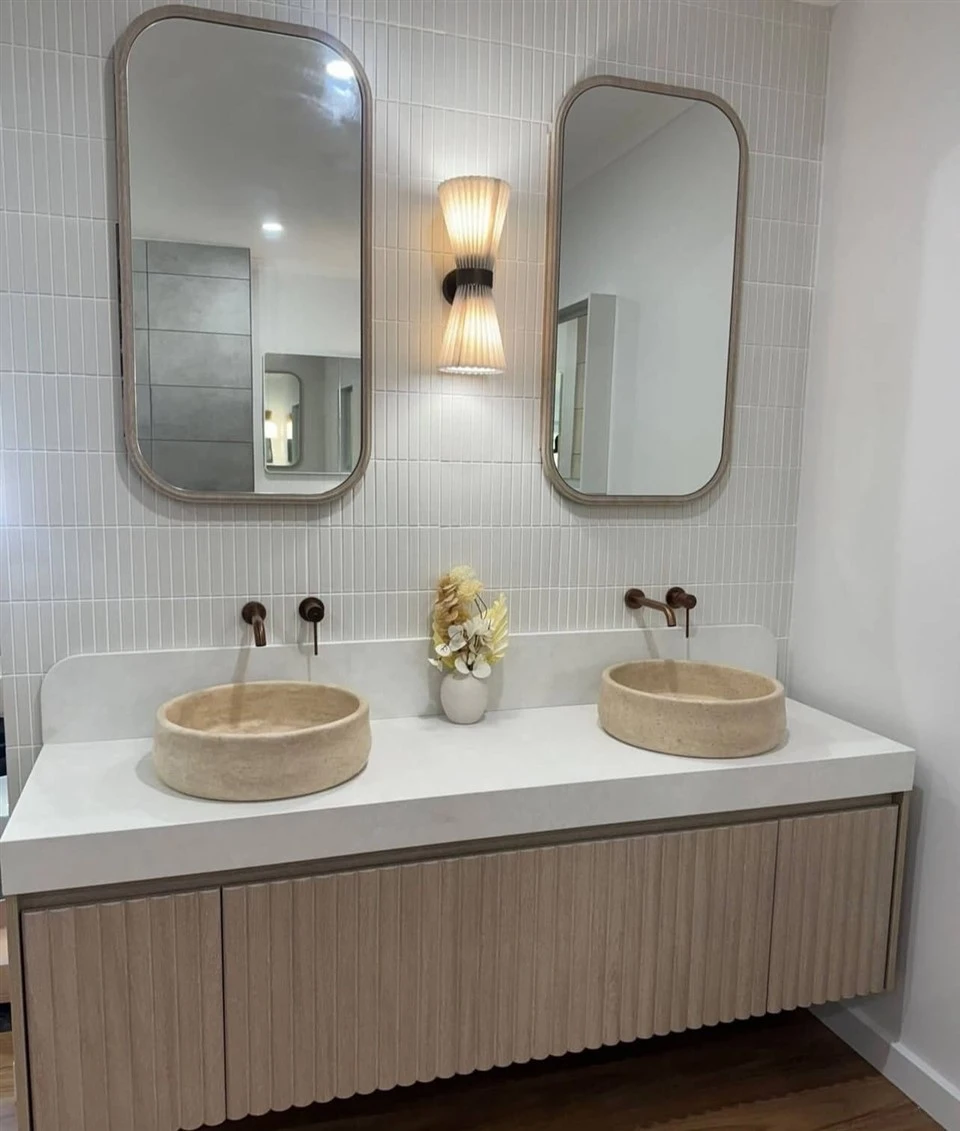
One of the main concerns people have is the visibility of the seams. Well, with modern technology and skilled craftsmanship, the seams on quartz vanity tops can be made almost invisible. Professional installers use special adhesives that match the color of the quartz as closely as possible. They also polish the seams to blend them seamlessly with the rest of the surface. However, it's important to note that in some cases, especially with certain patterns or colors, the seam might still be slightly noticeable. For example, if you have a quartz with a very unique and complex pattern, it can be a bit tricky to make the seam completely disappear.
Another issue that people worry about is the strength of the seams. When installed correctly, the seams on a quartz vanity top are actually quite strong. The adhesives used are designed to bond the slabs together securely. In fact, a well - installed seam can be just as strong as the rest of the quartz surface. But, if the installation is not done properly, there could be problems. For instance, if the surfaces are not cleaned and prepared correctly before applying the adhesive, the bond might not be as strong, and the seam could become a weak point over time.
Moisture can also be a concern. Since quartz is non - porous, it's resistant to water damage. But if water seeps into the seam, it could potentially cause problems. This is more likely to happen if the seam is not sealed properly. A good installer will seal the seam with a waterproof sealant to prevent water from getting in. However, over time, the sealant might wear off, especially in high - moisture areas like bathrooms. So, it's a good idea to periodically check the seams and re - apply the sealant if necessary.
Now, let's talk about the maintenance of the seams. Just like the rest of the quartz vanity top, the seams need to be cleaned regularly. You can use a mild soap and water solution to clean the surface. Avoid using abrasive cleaners or scrubbers on the seams, as this could damage the finish and make the seam more noticeable.
When it comes to choosing a quartz vanity top, you have a lot of options. You can check out our Quartz Basin Top for a sleek and modern look. Or, if you're looking for something with a sink included, our 36 Quartz Vanity Top with Sink and Quartz Vanity Top with Sink are great choices.
In conclusion, while there can be some potential issues with the seams on a quartz vanity top, these can be minimized with proper installation, maintenance, and care. If you're considering getting a quartz vanity top, make sure to work with a reputable installer who has experience in working with quartz. They'll be able to ensure that the seams are installed correctly and look great for years to come.
If you're interested in purchasing a quartz vanity top for your home or project, we'd love to talk to you. We can provide you with more information about our products, answer any questions you might have, and help you find the perfect quartz vanity top for your needs. Whether you're a homeowner looking to renovate your bathroom or a contractor working on a large project, we're here to assist you.
References:
- General knowledge about quartz vanity tops from industry experience.
- Information from quartz manufacturers' guidelines.