

How does Ivory White Quartz compare to quartzite in appearance?
Jul 17, 2025
Hey there! As a supplier of Ivory White Quartz, I often get asked how it stacks up against quartzite in terms of appearance. So, let's dive right in and break it down.
First off, let's talk about what Ivory White Quartz is. Ivory White Quartz is an engineered stone. It's made by combining crushed quartz with resin and pigments. This manufacturing process allows for a high level of control over its appearance. You get a consistent, uniform look that's pretty hard to beat.
On the other hand, quartzite is a natural stone. It's formed when sandstone is subjected to intense heat and pressure over time. This natural formation process gives quartzite a unique, one - of - a - kind appearance.

Color and Tone
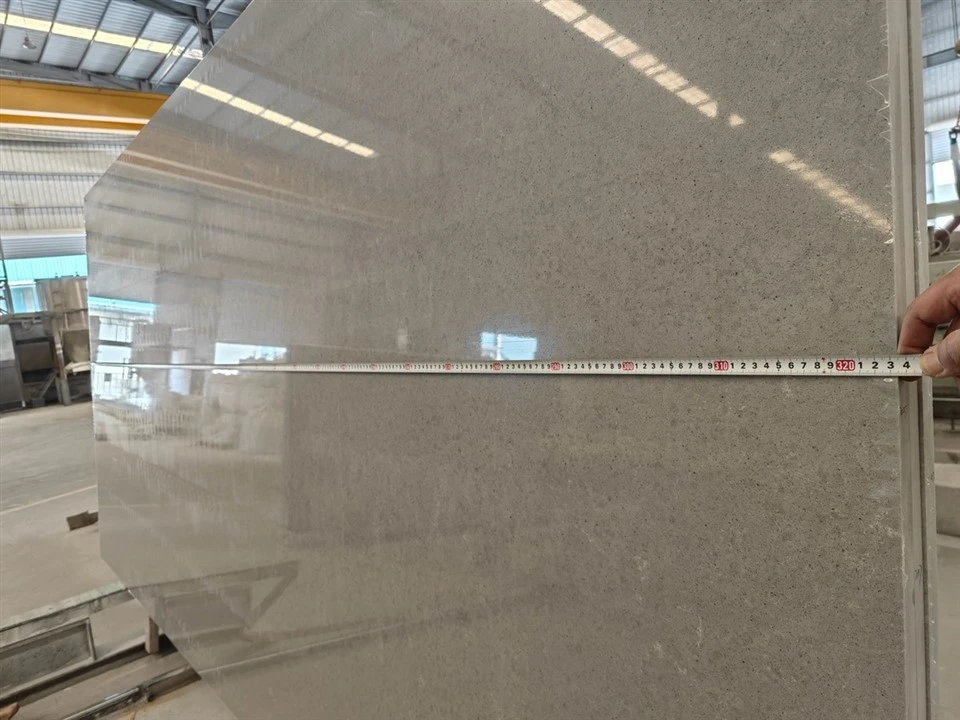
Ivory White Quartz lives up to its name with a beautiful, creamy white color. It's like a soft, warm blanket of white that can brighten up any space. The color is very consistent throughout the slab. There aren't those sudden shifts in tone or unexpected color patches that you might find in natural stones. This makes it a great choice if you're going for a clean, modern look.
Quartzite, however, can vary widely in color. It can range from pure white to shades of gray, pink, or even yellow. The natural veining in quartzite adds to its charm. These veins can be thin and delicate, or thick and bold, depending on the specific piece. If you love the idea of having a truly unique surface with natural variations, quartzite might be more your style.
But here's the thing, with Ivory White Quartz, you know exactly what you're getting. You can plan your kitchen or bathroom design with confidence, knowing that the color and pattern will match your vision. With quartzite, while the uniqueness is a plus, it can also be a bit of a wild card. You might fall in love with a particular slab at the showroom, but when it's installed, you might notice some differences in color or veining that you didn't anticipate.
Pattern and Veining
As I mentioned, Ivory White Quartz offers a more consistent pattern. It can have subtle veining or a more solid appearance, depending on the specific product. The veining in Ivory White Quartz is usually engineered to look natural, but it's more predictable. This is great for those who want a sophisticated look without the worry of a too - busy pattern overwhelming the space.
Quartzite's veining is truly a product of nature. It can be chaotic and random, which gives it a very organic feel. Some people love the drama that these bold veins bring to a countertop or backsplash. It can turn an ordinary room into a statement piece. But again, that randomness can be a challenge when it comes to matching pieces for a large installation.
Let's compare Ivory White Quartz with some other types of quartz I also supply. Crystal White Quartz has a more icy, cool - toned white color compared to the warm ivory of Ivory White Quartz. Its pattern might be a bit more sparkly, with small flecks that catch the light. Ash Grey Quartz, on the other hand, offers a completely different aesthetic with its muted gray tones.
Surface Finish
Ivory White Quartz typically comes in a variety of finishes, including polished, honed, and leathered. A polished finish gives it a shiny, reflective surface that makes the color and pattern really pop. It's great for a high - end, glamorous look. A honed finish, on the other hand, gives it a more matte, subdued appearance. It's less likely to show fingerprints and scratches, which can be a plus in a busy kitchen.
Quartzite can also be finished in different ways. A polished quartzite slab has a beautiful, natural shine that enhances its veining. However, because it's a natural stone, it can be more porous than quartz. This means that a polished quartzite surface might require more maintenance to keep it looking its best. A honed quartzite has a softer look, but it can also be more prone to staining in some cases.
Durability and Appearance Over Time
One of the great things about Ivory White Quartz is its durability. It's resistant to scratches, stains, and heat. This means that its appearance will stay consistent over time. You won't have to worry about chips or discoloration from everyday use.
Quartzite is also a durable stone, but it's not as forgiving as quartz. It can be more prone to scratching and etching, especially if it's not properly sealed. Over time, the natural variations in quartzite can be both a blessing and a curse. The veining might become more prominent as the surface wears, which could either add to its character or look a bit worn out, depending on your perspective.
In terms of cost, Ivory White Quartz is often more budget - friendly than quartzite. This doesn't mean that it's of lower quality. It's just that the manufacturing process allows for more efficient production, which is passed on to the consumer.
So, which one is right for you? If you want a consistent, low - maintenance, and cost - effective option with a beautiful, modern appearance, Ivory White Quartz is a great choice. If you're willing to pay a bit more for a truly unique, natural look with all the quirks and charm that come with it, quartzite might be the way to go.
If you're interested in learning more about Ivory White Quartz or any of our other quartz products, I'd love to chat. Whether you're a homeowner, a designer, or a contractor, we can work together to find the perfect solution for your project. Let's start a conversation and see how we can bring your design dreams to life.
References
- "Quartz vs. Quartzite: What's the Difference?" - Various industry articles on stone materials.
- In - house product knowledge and experience as an Ivory White Quartz supplier.