

How to calculate the Quartz Threshold?
Aug 22, 2025
Calculating the quartz threshold is a crucial step for anyone involved in construction, interior design, or even DIY projects. As a quartz threshold supplier, I've encountered numerous clients who are unsure about how to accurately calculate the requirements for their projects. In this blog post, I'll guide you through the process, providing valuable insights and practical tips to ensure you get the right amount of quartz threshold for your needs.
Understanding Quartz Thresholds
Before we dive into the calculation process, let's briefly understand what quartz thresholds are and why they are important. Quartz thresholds are used to transition between different floor surfaces, such as between a room and a hallway, or between a tiled area and a wooden floor. They provide a smooth and seamless transition, enhancing the overall aesthetic appeal of the space. Additionally, quartz thresholds are highly durable and resistant to wear and tear, making them an ideal choice for high-traffic areas.
Factors to Consider
When calculating the quartz threshold, several factors need to be taken into account. These factors will determine the quantity, size, and shape of the quartz threshold required for your project. Here are the key factors to consider:
1. Dimensions of the Opening
The first step is to measure the dimensions of the opening where the quartz threshold will be installed. This includes the length, width, and height of the opening. Accurate measurements are essential to ensure a proper fit and a professional finish. Use a tape measure to measure the length and width of the opening, and a level to ensure the surface is flat and level.
2. Type of Flooring
The type of flooring on either side of the opening will also affect the calculation of the quartz threshold. Different flooring materials have different thicknesses, which need to be considered when determining the height of the threshold. For example, if you are transitioning between a thick carpet and a thin tile floor, the threshold will need to be higher to accommodate the difference in height.
3. Design and Style
The design and style of the quartz threshold can also impact the calculation. Some thresholds are designed to be flush with the floor, while others may have a raised edge or a decorative profile. The style you choose will depend on your personal preference and the overall design of the space. Keep in mind that certain styles may require additional material or more complex installation techniques.
4. Waste Factor
It's important to account for a waste factor when calculating the quartz threshold. This is because there may be some cutting and fitting required during the installation process, which can result in some material being wasted. A waste factor of 5-10% is typically recommended to ensure you have enough material to complete the project.
Calculation Method
Now that we've considered the key factors, let's walk through the calculation method step by step.
Step 1: Measure the Length of the Opening
Using a tape measure, measure the length of the opening where the quartz threshold will be installed. Make sure to measure from one end of the opening to the other, taking into account any corners or curves. Record this measurement in inches or centimeters.
Step 2: Determine the Width of the Threshold
The width of the threshold will depend on the type of flooring and the design of the space. A standard width for a quartz threshold is between 2 and 4 inches. However, you may need to adjust this width based on your specific requirements. For example, if you are using a thick carpet, you may need a wider threshold to provide a smooth transition.
Step 3: Calculate the Area of the Threshold
To calculate the area of the threshold, multiply the length of the opening by the width of the threshold. For example, if the length of the opening is 36 inches and the width of the threshold is 3 inches, the area of the threshold would be 36 x 3 = 108 square inches.
Step 4: Account for the Waste Factor
As mentioned earlier, it's important to account for a waste factor when calculating the quartz threshold. Multiply the area of the threshold by the waste factor (e.g., 1.05 for a 5% waste factor). Using the previous example, if the area of the threshold is 108 square inches and the waste factor is 1.05, the total area of the threshold including waste would be 108 x 1.05 = 113.4 square inches.
Step 5: Convert to Square Feet
Most quartz threshold suppliers sell their products by the square foot. To convert the total area of the threshold from square inches to square feet, divide the total area by 144 (since there are 144 square inches in a square foot). Using the previous example, if the total area of the threshold including waste is 113.4 square inches, the total area in square feet would be 113.4 / 144 = 0.79 square feet.
Examples
Let's look at a few examples to illustrate the calculation process.
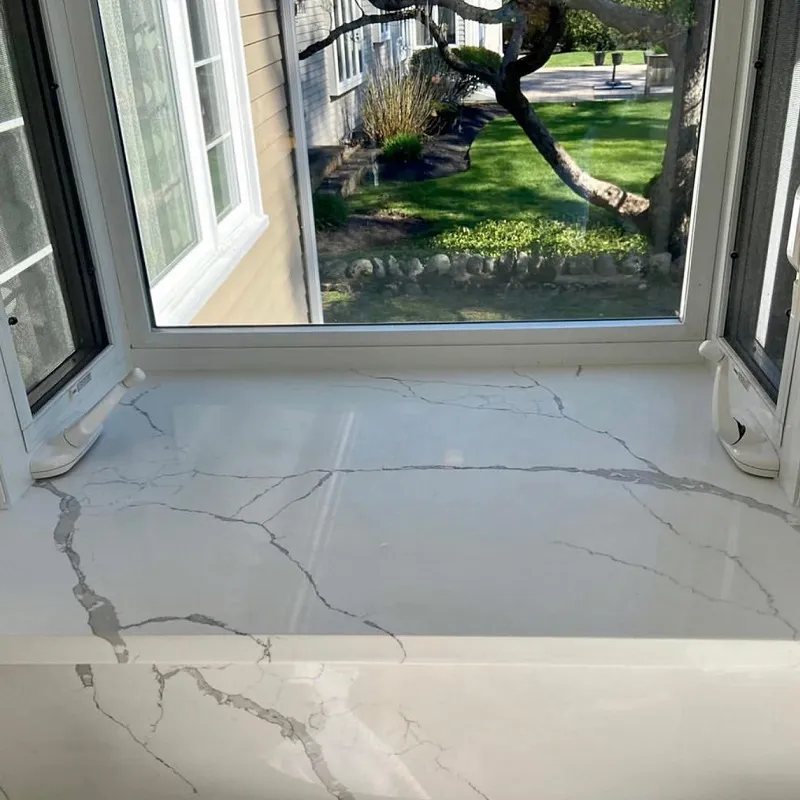

Example 1: Transition between a Tile Floor and a Hardwood Floor
- Length of the opening: 48 inches
- Width of the threshold: 3 inches
- Waste factor: 5%
- Calculate the area of the threshold: 48 x 3 = 144 square inches
- Account for the waste factor: 144 x 1.05 = 151.2 square inches
- Convert to square feet: 151.2 / 144 = 1.05 square feet
Example 2: Transition between a Carpeted Room and a Tile Hallway
- Length of the opening: 36 inches
- Width of the threshold: 4 inches
- Waste factor: 10%
- Calculate the area of the threshold: 36 x 4 = 144 square inches
- Account for the waste factor: 144 x 1.1 = 158.4 square inches
- Convert to square feet: 158.4 / 144 = 1.1 square feet
Additional Considerations
In addition to the calculation process, there are a few other considerations to keep in mind when installing a quartz threshold.
1. Installation Method
The installation method will depend on the type of threshold and the flooring materials. Some thresholds can be installed using adhesive, while others may require mechanical fasteners. Make sure to follow the manufacturer's instructions for the specific product you are using.
2. Sealing and Finishing
Once the quartz threshold is installed, it's important to seal and finish it to protect it from moisture and stains. Use a high-quality sealant that is specifically designed for quartz surfaces. Follow the manufacturer's instructions for application and drying times.
3. Maintenance
Quartz thresholds are relatively low maintenance, but they still require some care to keep them looking their best. Regular cleaning with a mild detergent and water is usually sufficient. Avoid using abrasive cleaners or tools that could scratch the surface.
Conclusion
Calculating the quartz threshold is a straightforward process that requires accurate measurements and careful consideration of several factors. By following the steps outlined in this blog post, you can ensure that you get the right amount of quartz threshold for your project and achieve a professional finish. If you have any questions or need further assistance, please don't hesitate to contact us. We are a leading Quartz Window Sills and Quartz Construction supplier, and we are committed to providing our customers with the highest quality products and services. Whether you are a contractor, designer, or DIY enthusiast, we have the expertise and resources to help you with your quartz threshold needs. So, if you're in the market for White Quartz Tiles Flooring or any other quartz products, contact us today to discuss your project and get a free quote.
References
- "Quartz Installation Guide," Manufacturer's Manual
- "Flooring Installation Handbook," Industry Publication
- "Interior Design Basics," Design Textbook