

Is a terrazzo basin slip - resistant?
Sep 09, 2025
Is a Terrazzo Basin Slip-Resistant?
As a supplier of terrazzo basins, I often receive inquiries from customers about the slip-resistant properties of our products. This is a crucial concern, especially for bathroom applications where safety is paramount. In this blog post, I'll delve into the factors that determine the slip resistance of terrazzo basins and provide insights to help you make an informed decision.
Understanding Slip Resistance
Slip resistance refers to the ability of a surface to prevent slipping when in contact with a person's foot. It is influenced by several factors, including the surface texture, the presence of contaminants (such as water, soap, or oil), and the coefficient of friction. A higher coefficient of friction indicates a more slip-resistant surface.
Surface Texture of Terrazzo Basins
Terrazzo is a composite material made up of chips of marble, quartz, granite, glass, or other aggregates embedded in a cement or resin binder. The surface texture of a terrazzo basin can vary depending on the manufacturing process and the type of aggregates used.
- Polished Terrazzo: A polished terrazzo surface has a smooth and shiny finish. While it offers an elegant and sophisticated look, it may not be the most slip-resistant option, especially when wet. The smooth surface reduces the friction between the foot and the basin, increasing the risk of slipping.
- Honed Terrazzo: A honed terrazzo surface has a matte finish that is less shiny than a polished surface. It provides a slightly rougher texture, which can improve slip resistance to some extent. However, it may still be slippery when wet, especially if there are contaminants on the surface.
- Textured Terrazzo: Some terrazzo basins are designed with a textured surface to enhance slip resistance. This can be achieved through various methods, such as sandblasting, etching, or adding anti-slip additives during the manufacturing process. Textured terrazzo surfaces offer a higher coefficient of friction, making them more slip-resistant, even when wet.
Contaminants and Slip Resistance
Contaminants such as water, soap, and oil can significantly reduce the slip resistance of a terrazzo basin. When these substances come into contact with the surface, they create a thin layer that reduces the friction between the foot and the basin.
- Water: Water is the most common contaminant in a bathroom environment. Even a small amount of water on the surface of a terrazzo basin can make it slippery. To minimize the risk of slipping, it is important to keep the basin dry and clean. Using a bathmat or a non-slip sticker can also provide additional traction.
- Soap and Shampoo: Soap and shampoo residues can accumulate on the surface of a terrazzo basin over time, making it even more slippery. Regular cleaning with a mild detergent and water can help remove these residues and maintain the slip resistance of the basin.
- Oil: Oil from skin, hair, or cosmetics can also reduce the slip resistance of a terrazzo basin. It is important to clean the basin regularly to remove any oil residues and prevent them from building up.
Coefficient of Friction and Slip Resistance
The coefficient of friction is a measure of the resistance to sliding between two surfaces. It is expressed as a number between 0 and 1, with a higher number indicating a higher coefficient of friction and better slip resistance.
- Testing Standards: There are several testing standards available to measure the coefficient of friction of a surface. The most commonly used standard is the American Society for Testing and Materials (ASTM) D2047, which measures the static coefficient of friction (SCOF) of a surface using a standard test device. A SCOF value of 0.5 or higher is generally considered acceptable for most applications, including bathroom floors and basins.
- Terrazzo Basin Coefficient of Friction: The coefficient of friction of a terrazzo basin can vary depending on the surface texture, the presence of contaminants, and the testing method used. Polished terrazzo surfaces typically have a lower coefficient of friction compared to honed or textured surfaces. However, with the use of anti-slip additives or surface treatments, it is possible to achieve a higher coefficient of friction and improve the slip resistance of a terrazzo basin.
Benefits of Slip-Resistant Terrazzo Basins
Investing in a slip-resistant terrazzo basin offers several benefits, including:
- Safety: The primary benefit of a slip-resistant terrazzo basin is improved safety. By reducing the risk of slipping, it helps prevent accidents and injuries, especially in a bathroom environment where the floor and basin are often wet.
- Durability: Terrazzo is a highly durable material that can withstand heavy use and wear. A slip-resistant terrazzo basin is designed to maintain its slip resistance properties over time, even with regular cleaning and use.
- Aesthetics: Terrazzo basins come in a variety of colors, patterns, and finishes, allowing you to choose a design that complements your bathroom decor. A slip-resistant terrazzo basin can offer both safety and style, making it a popular choice for homeowners and designers alike.
Our Terrazzo Basin Products
At our company, we offer a wide range of Terrazzo Sink Basin and Terrazzo Wash Basins that are designed to meet the highest standards of quality and safety. Our products are available in different surface textures, including polished, honed, and textured, to suit your specific needs and preferences.
- Anti-Slip Options: We offer several anti-slip options for our terrazzo basins, including textured surfaces and anti-slip additives. These options can significantly improve the slip resistance of the basin, even when wet.
- Customization: We understand that every customer has unique requirements. That's why we offer customization services to create terrazzo basins that are tailored to your specific design and size preferences. Whether you need a small vanity sink or a large soaking tub, we can create a custom solution for you.
- Quality Assurance: We are committed to providing our customers with the highest quality products. All of our terrazzo basins are manufactured using the latest technology and techniques, and they undergo rigorous quality control checks to ensure they meet our strict standards.
Conclusion
In conclusion, the slip resistance of a terrazzo basin depends on several factors, including the surface texture, the presence of contaminants, and the coefficient of friction. While polished terrazzo surfaces may not be the most slip-resistant option, honed and textured surfaces can offer improved slip resistance, especially when combined with anti-slip additives or surface treatments.

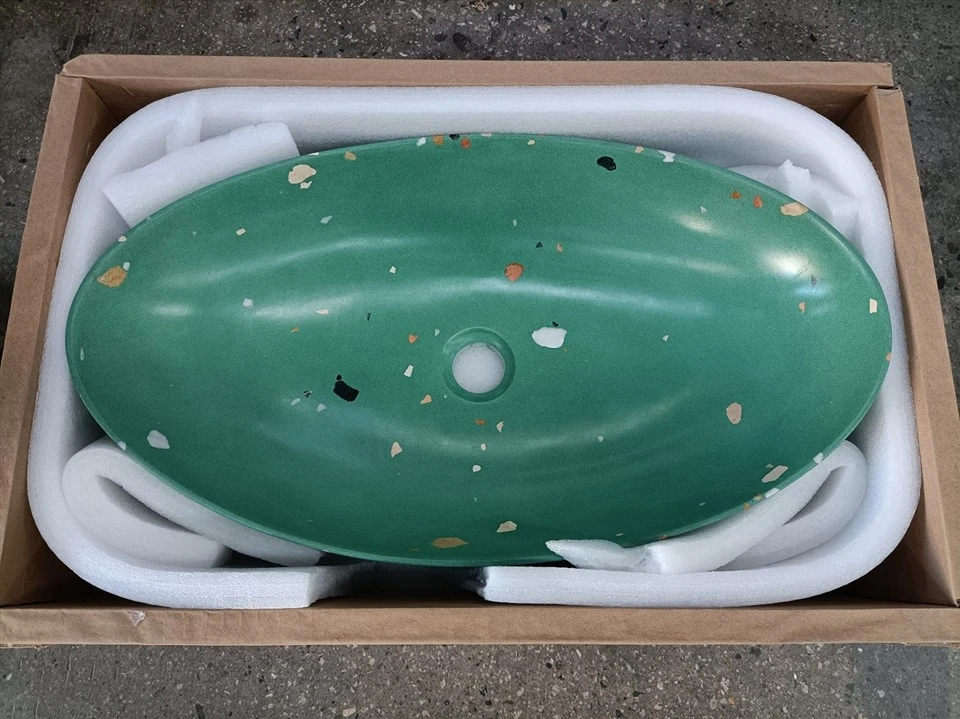
As a supplier of terrazzo basins, we are dedicated to providing our customers with high-quality, slip-resistant products that meet their safety and aesthetic needs. If you are interested in learning more about our Terrazzo Basin Bathroom products or have any questions about slip resistance, please feel free to contact us. We would be happy to assist you with your procurement needs and help you find the perfect terrazzo basin for your bathroom.
References
- American Society for Testing and Materials (ASTM). (2018). Standard Test Method for Static Coefficient of Friction of Polishable Floor Surfaces Using the James Machine. ASTM D2047-18.
- National Floor Safety Institute (NFSI). (n.d.). Understanding Coefficient of Friction. Retrieved from https://www.nfsi.org/understanding-coefficient-of-friction/