Diverse Choices and Key Differences of Quartz
May 05, 2025
In today's building and decoration materials market, quartz has attracted widespread attention for its unique charm and practicality.As a composite material made of quartz sand, resin and other additives under high temperature and high pressure, quartz has shown significant advantages in terms of beauty, durability and easy maintenance. However, there are many types of quartz products on the market, and understanding the differences between them is essential to making wise purchasing decisions.
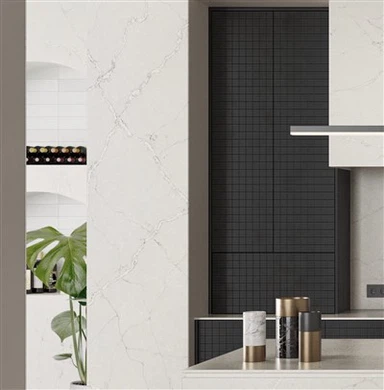
The color and texture of quartz are one of its most intuitive differences. The texture and color of natural quartz are more natural and varied, and each stone has a unique texture pattern. Artificial quartz can achieve richer and more uniform color options by adding different pigments to meet the needs of different design styles. In addition, artificial quartz is generally better than natural quartz in color consistency and stability.
Hardness and wear resistance are another important indicator for evaluating the quality of quartz. Natural quartz has a high hardness, with a Mohs hardness of 6-7, which makes it resistant to daily wear and scratches. Although the hardness of artificial quartz is slightly inferior to that of natural stone, its wear resistance and impact resistance have been significantly improved through formula optimization.
In terms of environmental performance, natural quartz, as an inorganic material, does not contain organic matter, so it is not easily corroded by pollutants and is more environmentally friendly. Artificial quartz may add some chemical components during the production process, but high-quality products can also meet higher standards in environmental indicators.
Price factors cannot be ignored. Natural quartz is usually more expensive due to its scarcity and difficulty in mining and processing. Artificial quartz is more affordable because of its large production scale and relatively low cost.
In summary, when choosing quartz, you should consider factors such as color texture, hardness and wear resistance, environmental performance and price, and make a wise choice based on actual needs.