

How does the Quartz Threshold impact the magnetic properties of quartz - bearing rocks?
Sep 08, 2025
Hey there! As a supplier of Quartz Threshold, I've been really into exploring how the Quartz Threshold impacts the magnetic properties of quartz - bearing rocks. It's a super interesting topic that combines geology and material science, and I'm stoked to share my insights with you.
First off, let's talk about what quartz - bearing rocks are. These are rocks that have quartz as one of their main components. Quartz is a pretty common mineral, and it can be found in a variety of rocks like granite, sandstone, and quartzite. The amount of quartz in these rocks can vary quite a bit, and that's where the Quartz Threshold comes in.
The Quartz Threshold refers to the critical amount of quartz in a rock beyond which certain properties start to change significantly. In the case of magnetic properties, the presence of quartz can have a big impact. You see, most rocks have some level of magnetism due to the presence of magnetic minerals like magnetite. But quartz itself is non - magnetic. So, when the amount of quartz in a rock reaches the Quartz Threshold, it can start to dilute the magnetic minerals and change the overall magnetic behavior of the rock.
One of the key ways the Quartz Threshold affects magnetic properties is through the reduction of magnetic susceptibility. Magnetic susceptibility is a measure of how easily a material can be magnetized in the presence of a magnetic field. In quartz - bearing rocks, as the quartz content increases towards the Quartz Threshold, the magnetic susceptibility tends to decrease. This is because the non - magnetic quartz takes up space that would otherwise be occupied by magnetic minerals. As a result, there are fewer magnetic minerals available to interact with the magnetic field, leading to a lower magnetic response.
Another aspect is the change in magnetic anisotropy. Magnetic anisotropy refers to the direction - dependent magnetic properties of a material. In rocks, the alignment of magnetic minerals can give rise to magnetic anisotropy. When the quartz content crosses the Quartz Threshold, it can disrupt the alignment of magnetic minerals. Quartz can act as a physical barrier, preventing the magnetic minerals from aligning in an orderly way. This disruption can lead to a decrease in magnetic anisotropy, making the rock's magnetic properties more isotropic (the same in all directions).
Now, let's think about the practical implications of these changes. In geological surveys, magnetic properties are often used to map subsurface rock formations. If the Quartz Threshold causes significant changes in the magnetic properties of quartz - bearing rocks, it can make it more challenging to interpret magnetic data. Geologists might misinterpret the data if they don't take into account the effect of the Quartz Threshold. For example, a rock with a high quartz content might show a lower magnetic signature than expected, leading to an incorrect assessment of the underlying geology.
In the construction industry, understanding the impact of the Quartz Threshold on magnetic properties can also be important. For instance, if you're using quartz - bearing rocks for building materials, the magnetic properties can affect how the materials interact with electromagnetic fields. This could be relevant in buildings with sensitive electronic equipment, where any unexpected magnetic interference could cause problems.
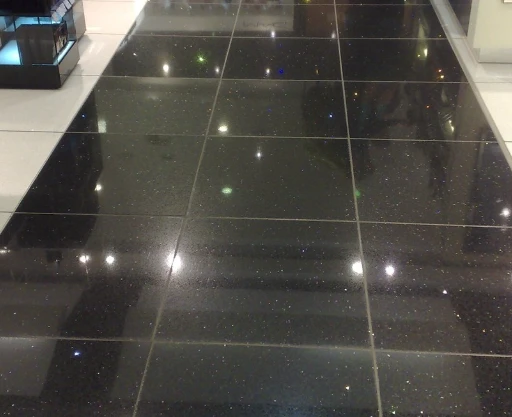
As a Quartz Threshold supplier, I offer a wide range of quartz products that can be used in various applications. If you're looking for high - quality quartz materials, check out our White Quartz Tiles Flooring. These tiles are not only beautiful but also have consistent quartz content, which can be beneficial for projects where the Quartz Threshold and its associated properties are a concern.
We also have Quartz Skirting that can add a touch of elegance to your interior. The skirting is made from carefully selected quartz - bearing materials, ensuring that the Quartz Threshold is well - controlled to meet your specific requirements.
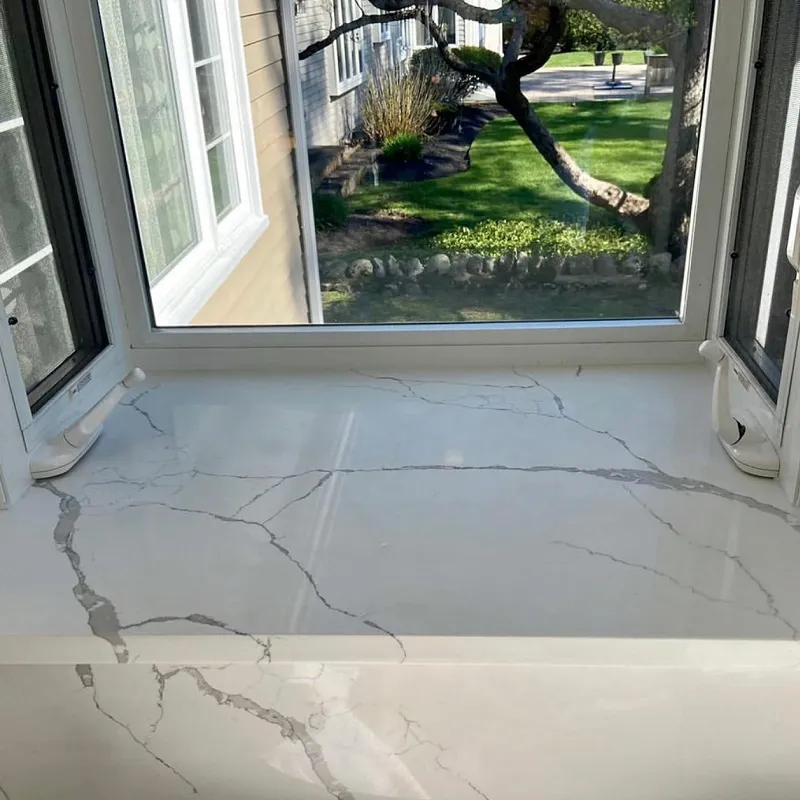
And for those who want to enhance the look of their windows, our Quartz Window Sills are a great choice. They are durable and have the right balance of quartz content to maintain stable magnetic properties.
If you're interested in learning more about how our Quartz Threshold products can fit into your project or if you have any questions about the impact of the Quartz Threshold on magnetic properties, don't hesitate to reach out. We're here to help you make the best decisions for your needs. Whether you're a geologist, a construction professional, or someone with a general interest in rocks and minerals, we can provide you with the information and products you need.
In conclusion, the Quartz Threshold plays a crucial role in determining the magnetic properties of quartz - bearing rocks. It can lead to changes in magnetic susceptibility and anisotropy, which have implications for both geological surveys and construction projects. As a supplier, I'm committed to providing high - quality quartz products that take these factors into account. So, if you're in the market for quartz materials, give us a shout, and let's start a conversation about your project.
References
- Clark, D. A. (1997). Magnetic properties of rocks and minerals. In Treatise on Geophysics, Volume 3, Rock Physics and Fluid Mechanics.
- Hunt, C. P., Moskowitz, B. M., & Banerjee, S. K. (1995). Magnetic properties of rocks and minerals. Reviews of Geophysics, 33(4), 283 - 310.